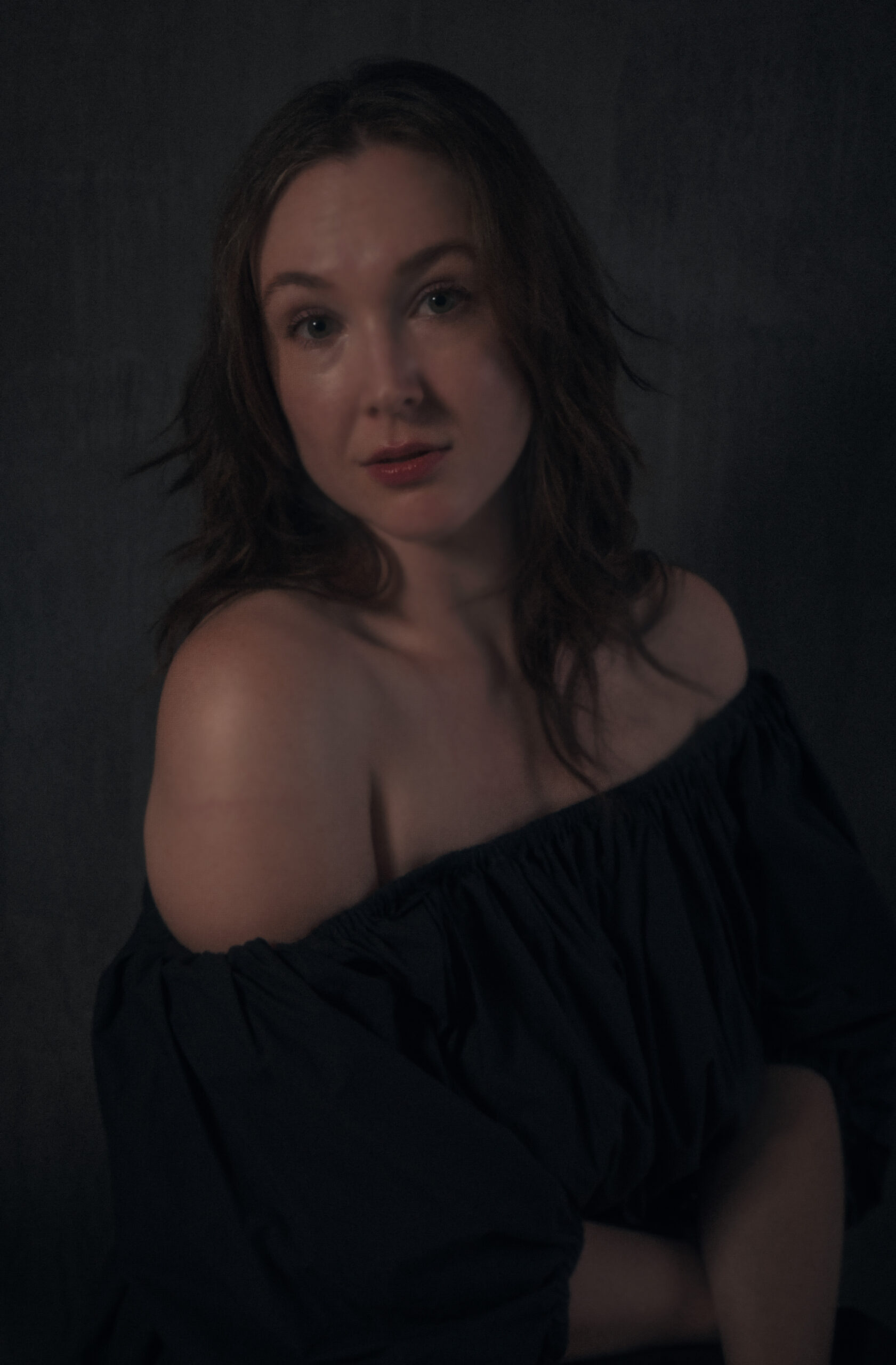
There is a question I get occasionally from clients who have looked carefully at my fine art portrait work before getting in touch. It usually goes something like: “Your images look different from other photographers. What is it that you’re actually doing?”
The honest answer is that I’m not doing something a photographer invented. I’m doing something painters worked out four hundred years ago.
Every fine art portrait session at Oak & Grey is informed — consciously or instinctively — by three painters: Rembrandt van Rijn, Michelangelo Merisi da Caravaggio, and John William Waterhouse. Not as a formula. Not as a checklist. More as a set of instincts that have been absorbed over years of looking carefully at paintings and thinking seriously about what makes a portrait work.
This is what each of them brings into my studio in Perth, and why.
Rembrandt — The Architecture of Light
Rembrandt van Rijn is, for my money, the greatest portrait painter who ever lived. Not because of technical virtuosity — though the technical mastery is extraordinary — but because of what he understood about light and what light can do to a face.
Rembrandt’s signature is a quality of illumination that feels simultaneously intimate and monumental. His subjects are lit as though the light source is just out of frame — a window, a candle — and the rest of the world falls away into warm shadow. The result is a portrait that feels private. Like you’ve caught this person in a moment of genuine presence, not performing for an audience.
The specific technique — a single light source positioned to one side and slightly above the subject, creating a small triangle of light on the shadowed cheek — is now called Rembrandt lighting. Every photographer who has ever used it owes him a debt.
What I take from Rembrandt is not the triangle of light specifically. It’s the underlying idea: that shadow is not the absence of subject matter. Shadow is subject matter. The parts of a face that fall into darkness are as important as the parts that are illuminated — perhaps more important, because they are where mystery lives.
When I’m setting up a fine art portrait session at Huzzard Studios in Perth, the first question I ask is not “where should the light go?” It’s “where should the shadow go?” That’s a Rembrandt question.
Caravaggio — Drama as a Form of Truth
If Rembrandt’s light is intimate, Caravaggio’s is confrontational. Where Rembrandt pulls you gently into a portrait, Caravaggio grabs you by the collar.
Caravaggio’s figures emerge from almost absolute darkness. His backgrounds are not dark — they are black. The contrast ratio in his paintings is extreme, sometimes violent. And yet the figures themselves are rendered with a tenderness and specificity that is almost photographic in its realism. He painted the dirt under fingernails. The roughness of cloth. The exact way a lip catches light.
The technique associated with Caravaggio — tenebrism, from the Italian tenebroso, meaning “dark” or “gloomy” — is chiaroscuro taken to its most extreme expression. It is not merely the use of shadow. It is the domination of shadow, with light used surgically to reveal exactly what the painter wants you to see and nothing else.
What I take from Caravaggio is the understanding that drama in a portrait is not about expression. It’s not about a particular pose or a specific emotion on the subject’s face. It’s about the relationship between what is shown and what is withheld. A portrait becomes dramatic when the viewer’s eye is controlled — when they cannot look anywhere except where you want them to look.
In practice, this means that when a fine art portrait session calls for something with genuine visual weight, I’ll push the contrast further than feels comfortable. I’ll let more fall into shadow than seems safe. The instinct to fill in the darkness, to make everything visible and even, is almost always wrong. Caravaggio knew this. I’ve learned it slowly.
Waterhouse — Narrative and the Interior Life
John William Waterhouse is the outlier in this trio, and deliberately so.
Rembrandt and Caravaggio are about light. Waterhouse is about something else entirely: psychological presence. His figures — almost always women, almost always caught in a moment of interior contemplation — have an inner life that radiates from the canvas. You do not wonder what they are feeling. You feel it with them.
Waterhouse worked in the Pre-Raphaelite tradition, which means his images are rich with symbolic detail — fabric, flowers, water, objects that carry meaning — and his colour palette is saturated and considered. But what sets his portraits apart is the quality of attention he pays to his subjects’ interiority. His women are not decorative. They are thinking. They are waiting. They are deciding something.
This is what I bring from Waterhouse into every fine art portrait session: the insistence that the subject’s inner life must be visible in the finished image. A technically perfect portrait that tells you nothing about the person in it is not a fine art portrait. It is a well-lit photograph.
When I’m directing a fine art session, I’m not asking my subject to perform an emotion. I’m asking them to inhabit a state. There’s a difference — and it shows in the image.
How They Work Together
These three painters do not represent a formula. I do not sit down before a shoot and decide: today we’re doing Rembrandt, or today we’re doing Caravaggio. It doesn’t work like that.
What they represent is a set of overlapping instincts that have become part of how I see. When I’m looking through the viewfinder, I’m asking questions that these painters taught me to ask. Where is the shadow? What am I withholding? What does this person’s inner life look like — and is it visible?
The lighting setup for every fine art portrait session at Oak & Grey varies because the concept varies. Some sessions call for the deep, intimate contrast of Rembrandt. Some call for the more extreme drama of Caravaggio. Some are primarily about capturing the quality of psychological presence that Waterhouse achieved. Most are some combination of all three — which is perhaps why clients sometimes find it difficult to identify exactly what makes the images feel different.
It’s not one thing. It’s four hundred years of painters who understood something true about human faces, translated slowly and imperfectly into a studio in Perth.
What This Means for a Fine Art Portrait Session
If you’re considering a fine art portrait session at Oak & Grey, this context might help you understand what the experience involves and what the images are trying to do.
A fine art portrait session here is not a photoshoot in the conventional sense. It’s a collaborative process that begins weeks before the shoot — developing the concept, considering the wardrobe and props, thinking carefully about what the image is trying to say.
On the day, we work at Huzzard Studios in Perth with a full creative setup. The lighting changes as the shoot develops. The conversation about what we’re making continues throughout. Post-production is extensive — the final image is not what the camera captured. It’s what the camera captured, refined through a process informed by the same painters who informed the shoot itself.
The result is an image that sits somewhere between photography and painting. Something worth printing large and hanging with care. Something that will still make sense in twenty years.
If that’s what you’re looking for, I’d encourage you to get in touch.
Oak & Grey offers fine art portrait photography sessions in Perth, Western Australia, at Huzzard Studios. Limited edition archival prints on cotton rag matte paper are available. Sessions are by enquiry — we work with a small number of fine art clients each month.